
 Get a free quote


What You’ll Learn in This Blog
|
Many tenants believe a kitchen just needs to “look clean” before moving out.
It doesn’t.
Getting this wrong can lead to deposit deductions for grease build-up, mould, appliance hygiene, or limescale — even when the room appears tidy at first glance.
Cleaning is consistently reported as one of the most common causes of deposit disputes in UK tenancy deposit scheme summaries.
These are the same issues that repeatedly appear in disputes assessed under the Tenancy Deposit Scheme, Deposit Protection Service, and MyDeposits adjudication criteria.
This guide shows you exactly how to avoid that.
The advice below is based on practical experience preparing and reviewing hundreds of rental kitchens for final landlord inspections across the Midlands. The issues described are not theoretical — they are recurring inspection failures.
Why Cleaning Causes Deposit Disputes in the UK

Under UK law, landlords cannot charge for fair wear and tear. However, they can deduct costs if the property is returned in a worse condition than at the start of the tenancy.
Deposit disputes are handled through government-approved schemes such as:
- Tenancy Deposit Scheme (TDS)
- Deposit Protection Service (DPS)
- MyDeposits
Across these schemes, cleaning-related issues consistently rank among the most frequent causes of deductions.
Typical kitchen failures include:
- Hardened grease in ovens and extractor filters
- Black mould around the sink sealant
- Limescale build-up on taps
- Food residue inside appliances
- Stained cupboard interiors
The key distinction is this:
Wear happens naturally. Neglect builds over time.
Inspections focus on whether the condition reflects normal use or avoidable build-up.
How Clean Is “Clean Enough” For A Rental Kitchen In The UK?
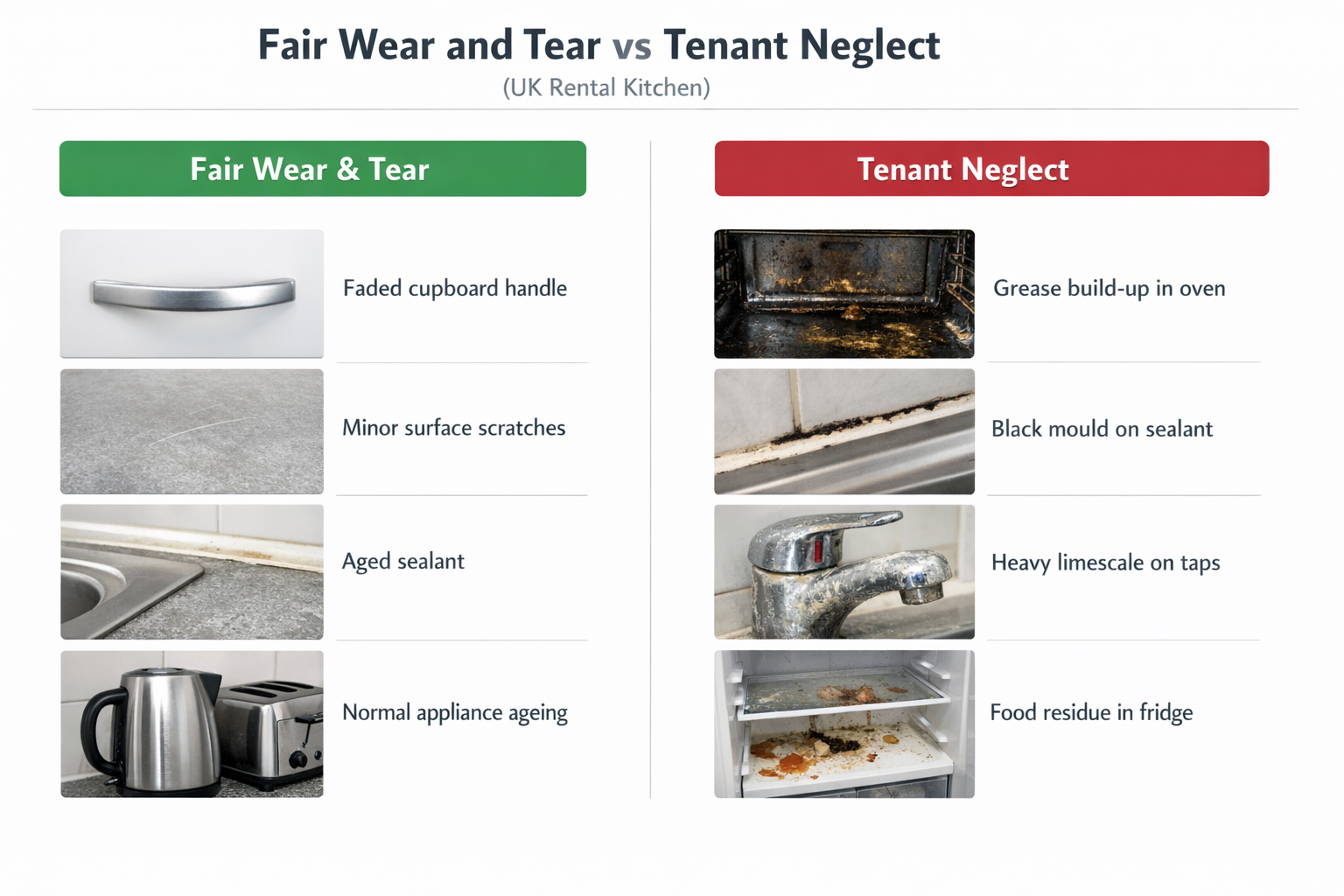
A rental kitchen should be returned to the same standard of cleanliness recorded in the move-in inventory report.
This usually means:
- No grease accumulation
- No tenant-caused mould
- Appliances cleaned internally
- No strong odours
- No food waste or residue
If the oven or kitchen was professionally cleaned before you moved in, landlords may reasonably expect a similar standard on return.
This is not about perfection.
It is about matching the documented condition.
10 Habits That Prevent End-of-Tenancy Cleaning Stress
These habits reduce the likelihood of needing intensive professional cleaning later.
1. Clean As You Cook — Before Grease Bonds To Surfaces
Grease changes over time.
Fresh oil wipes away easily. Old grease bonds to metal and laminate.
One of the most common patterns seen during inspection preparation is hardened grease around hob edges and cabinet undersides — areas tenants rarely notice until the final week.
Daily essentials:
- Wipe the hob and splashback
- Clean visible splashes
- Rinse and dry the sink
- Remove crumbs and food debris
Ask:
“If this dries overnight, will it leave a mark?”
If yes, clean it now.
Small daily actions prevent large final problems.
2. Clean Extra ctor Filters Before They Trigger Inspection Flags
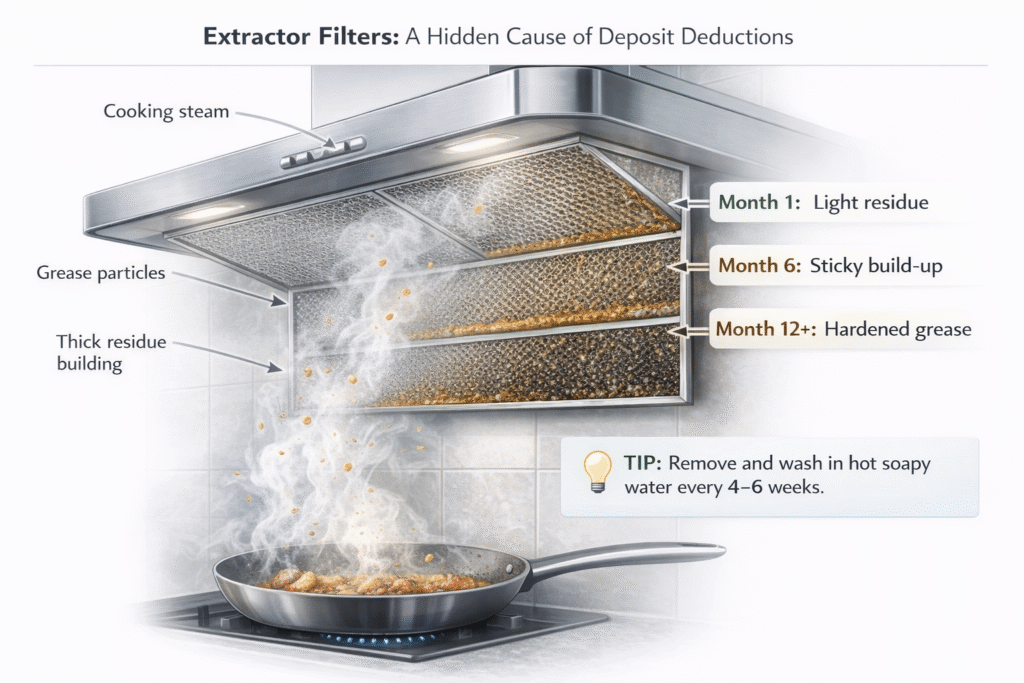
Extractor fans are frequently inspected — and frequently ignored.
Grease vapour rises during cooking and settles inside filters. Over months, it forms a thick residue that cannot be removed with light wiping.
In many end-of-tenancy reviews, extractor filters are among the top overlooked failures.
What to check:
- Sticky filter surface
- Grease on cabinet tops
- Yellowing around the fan housing
Remove and wash metal filters regularly in hot, soapy water.
Reality insight: Problems rarely appear in the first six months. They emerge after extended cooking without filter maintenance.
3. Use Cleaners That Protect Rental Surfaces
Harsh chemical damage is not classed as fair wear and tear.
Laminate swelling, discoloured cupboard finishes, and damaged sealant often result from aggressive bleach use.
Safe alternatives:
- White vinegar for surface cleaning
- Baking soda for stain lifting
- Lemon juice for limescale
These support an eco-friendly kitchen while preserving surfaces.
Important: Avoid vinegar on natural stone worktops.
Strong cleaning is not always smart cleaning.
4. Prevent Mould Around Sink Sealant
Black mould around silicone sealant is a common deduction trigger.
Moisture collects along sink edges and behind taps. Without drying or ventilation, mould forms gradually.
Once embedded into silicone, full removal may require resealing.
Daily prevention:
- Dry sink edges
- Wipe tap bases
- Allow airflow after washing up
The earlier you act, the easier it is.
5. Separate Chopping Boards To Maintain Hygiene Standards
Kitchen hygiene expectations apply throughout your tenancy.
Cross-contamination can lead to:
- Odours
- Surface staining
- Hygiene concerns during inspection
Safe cooking basics:
- Separate board for raw meat
- Separate board for vegetables
- Wash boards immediately
- Dry thoroughly
Consistent hygiene protects both health and property condition.
6. Keep The Fridge Organised And Neutral-Smelling
Fridges are inspected inside.
Recurring inspection issue:
Spills beneath drawers and sticky door seals.
Weekly routine:
- Remove expired food
- Wipe shelves and seals
- Clean interior surfaces
To reduce odours:
- Use sealed containers
- Place the baking soda inside
Odour control alone is not sufficient. Surfaces must be wiped.
7. Replace Or Disinfect Cloths And Sponges Frequently
Damp cloths harbour bacteria.
We regularly see kitchens where surfaces appear clean, but hygiene is compromised by overused sponges.
Best practice:
- Wash cloths every 1–2 days at 60°C
- Disinfect sponges via dishwasher or boiling water
- Allow full drying
Visible cleanliness and hygienic cleanliness are not the same.
8. Prevent Drain Blockages Before They Become Tenant Liability
Blocked drains caused by grease are commonly disputed.
Before pouring anything down the sink, consider whether it will solidify.
Preventative habits:
- Scrape plates
- Avoid pouring oils into drains
- Empty bins regularly
- Compost food scraps where possible
Sustainable kitchen habits reduce plumbing issues and disputes.
9. Use Dishwashers Correctly
A modern dishwasher, when full, often uses less water than handwashing under a running tap.
However:
Low-temperature cycles may not fully remove heavy grease.
Decision guide:
- Light load → eco cycle
- Heavy grease → hotter cycle
Efficiency must not reduce hygiene standards.
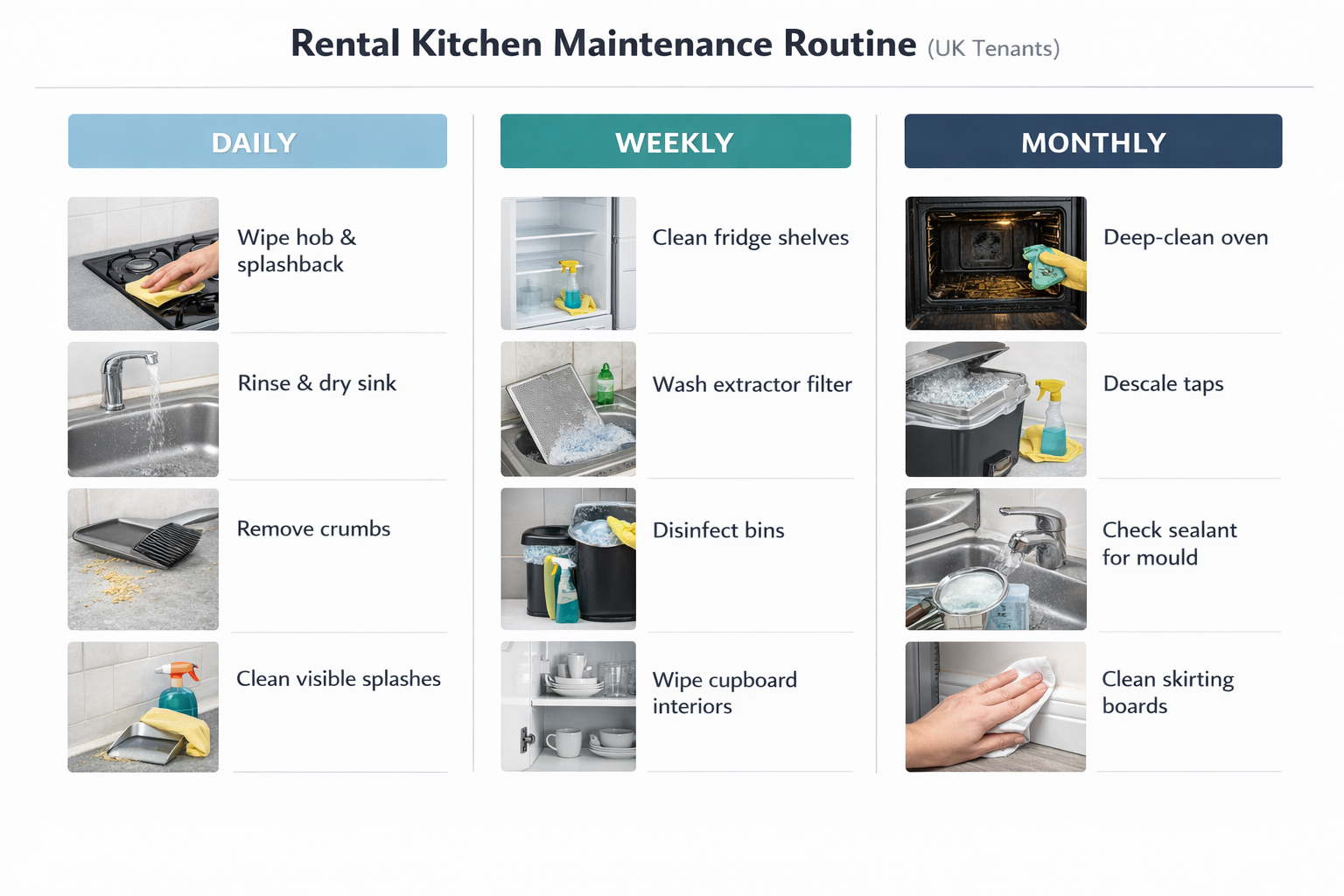
10. Use This Kitchen Inspection Checklist At Move-Out
Before returning your keys, confirm:
- Oven interior, racks, and glass degreased
- Extractor filter cleaned
- Hob and splashback oil-free
- Sink descaled and sealant mould-free
- Fridge emptied and wiped
- Cupboards cleaned internally
- Floor edges and skirting boards wiped
- Bins disinfected
- No food waste remaining
This reflects the level most inventory clerks assess against.
When Professional End Of Tenancy Cleaning May Be Appropriate
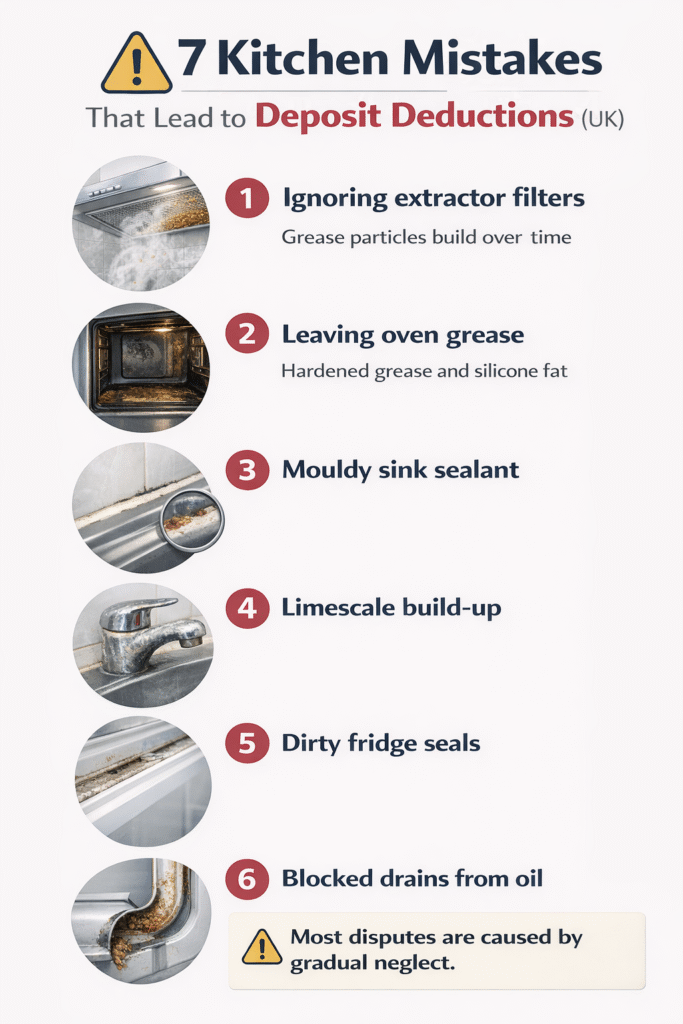
Daily care reduces risk — but some situations require deeper intervention.
You may consider professional end-of-tenancy cleaning services if:
- Grease has hardened
- Mould is embedded
- Your tenancy agreement specifies professional cleaning
- The property was professionally cleaned at move-in
Some tenants choose structured tenancy cleaning services to reduce uncertainty where standards are unclear.
It is a risk-based decision, not a requirement in every case.
Final Thought: Deposits Are Lost Gradually, Not Suddenly
Most deposit deductions are not caused by one mistake.
They are caused by small issues repeated over time.
If you maintain your kitchen consistently and understand inspection standards, you reduce uncertainty at move-out.
Clarity removes anxiety.
Consistency protects deposits.
Preparation prevents disputes.
Frequently Asked Questions
Can a landlord deduct cleaning from a deposit in the UK?
Yes, if the property is returned in a worse condition than at check-in, excluding fair wear and tear.
What is fair wear and tear in a kitchen?
Normal ageing through everyday use. It does not include heavy grease, mould from neglect, or avoidable staining.
How often should a rental kitchen be cleaned?
Light cleaning daily. Deeper cleaning weekly. Appliance detailing monthly.
What do landlords check in a kitchen inspection?
Ovens, extractor filters, sealant condition, fridge hygiene, cupboards, and overall cleanliness.
How do I deep-clean before moving out?
Degrease appliances, descale taps, clean grout, wipe cupboards, and remove mould from sealant.